Monday, May 13, 2013

Ch. 7 Business Marketing

An example of business marketing and purchases in conjunction with Burt's Bees is the use of MEI software. Up until the point that the firm began using the software offered by MEI they were still using Excel spreadsheets to track sales, accounts, and project future sales based on data imported in Excel by a handful of people at the company. The shift enabled Burt's Bees to boost efficiency quickly and increased levels of productivity to new heights.

The purchase of the MEI software was certainly a business product vs. a consumer product as it would ultimately fulfill the needs of the business as a whole, to work better, faster, and with more accuracy. Tracking spending and managing sales forecasts could now all be done by using a single system with the capabilities to monitor, store, and compartmentalize all the data the Burt's Bees would input to run the company from supply and production costs, to future sales projections based on previous data. Additionally more Burt's Bees employees would use the services of the software, and instead of only a handful of people doing a job and knowing its components many of Burt's Bees employees would seamlessly use the same system to input and export data for the company.

It hadn't occurred to me how important this aspect is to a growing company until I began reading and learning of the changes that Burt's Bees has made in the last 20 years as a brand within a growing industry. It's interesting to have learned how the company continues to grow and innovates their products as well as seeing how they respond to changes while holding on to the core values of environmental sustainability, high productivity and quality products.


Monday, May 6, 2013

Ch. 8 Segmenting & Targeting Markets

In the beginning of Burt's Bees and during the early years the company was part of a growing niche market, and still is today- though it can no longer be termed 'niche' -of natural personal care products, under the larger umbrella of personal care products, along with cosmetics.

Segmenting markets are important as they allows companies to hone in on and focus on a very specific set of criteria for potential customers. How old are they? How much money do they make? How educated are they? What kinds of lifestyles do they live? These questions can be asked answered throughout virtually every facet of marketing, but this is how segmenting ultimately begins. The definition of marketing is made up of elements. Elements change, products change, advertisements change, but the main goal remains the same; to exchange things of value to others. How is the Burt's Bees product priced? Where is it placed? Who are the people that buy these products?

Key product offerings that are great examples of segmenting and targeting markets from Burt's Bees;  a line of baby products.
 
In 2012 Burt's Bees teamed up with AyaBlu, a company specializing in developing baby products and toys in a license agreement to create a entire new product line of garments and toys and for the first time ever the company moved into a market outside of the personal care industry. At the time of the alliance the company had already offered a variety of baby products; washes, moisturizers, ointments and soaps. 


This line of products represents a different consumer than those that buy Burt's Bees more well known products, as it is specifically tailored to babies and mothers. While segmenting and targeting this market new questions are raised as to what type of products do mothers seek for there new born babies, how can the products be packaged designed and implemented in a way that will attract the Burt's Bees target market. The new line from Burt's Bees Baby as well as its website and the launch of its products to several key retailers nationwide, such as Target.com is how Burt's Bees has introduced this new line of products to its target market. 


Monday, April 29, 2013

Ch. 11 Developing & Managing Products

Burt's Bees began in 1894 selling candles. The owners at the time Roxanne Quimby and Burt Shavitz used left over beeswax from Shavitz' honey bee business to create the candles. In 1991 when the company incorporated they extended there product mix to include beeswax based lip balms.

Below, take a look at Burt's Bees first lip balm.


Today the Burt's Bees lip balms remains the companies best-selling product. Over the years the company has extended and modified many of its existing products, and the lip balms have continued to evolve as well. The product lines have changed as well as the packaging, still going hand-in-hand with the Burt's Bees Greater Good business model while staying creative and eco-friendly.


The difference between the first and second picture clearly show a difference in the same Burt's Bees product, and here it is clear that packaging plays a large role in the evolution and life-cycle of a product. The older version is much harder to find today and while shopping at local retailers that stock Burt's Bees merchandise it is hard to find on shelves.

In time Burt's Bees has brainstormed and developed new versions of the same type of product existing within a product line, which now ranges from lip shimmers, to tints and to lip glosses. Additionally all the products within this category are still made with beeswax, and other natural ingredients of course.


Monday, April 22, 2013

Ch. 16 Promotional Planning for Competitive Advantage


Burt's Bees most recent 'Güd' line focused on a newer niche of products, those heavily influenced by scent. As a change from what I have become used to in a Burt's Bees product it in interesting to see the brand position there focus slightly elsewhere to adhere to a new and younger target market. Burt's Bees wanted to target this consumer, women between the ages of 18 and 24 who are interested in products that are trendier, and have more mass appeal, than a beeswax lip balm. Lately it has been good to see through this process and others how many companies are using social media to boost sales promotion and create advantages for products.


An example is the Burt's Bees Güd line, whose FaceBook page had over 170,000 likes before its official launch, in conjunction and at the same time scratch and sniff ads for scented lotions and creams were launched in Allure and Lucky magazines. The use of street teams at nationwide universities also helped to bring exposure to the brands new line. The photos above show the unusual ads by Baldwin& that Burt's Bees used to promote its new fragrance focused line.


Monday, April 15, 2013

Ch. 10 Product Concepts


As mentioned before Burt's Bees is a personal care company, specifically it is part of an ever-growing niche industry of 'natural' personal care products. The items that Burt;s Bees offer range from, hand creams and body lotions, to face washes and lip balms. In recent years they have broadened and expanded product offerings to include, lip glosses shimmers and sun-screens.

People who routinely use Burt's Bees products and choose them specifically are buying specialty consumer products. In essence this means that potential customers are 1. purchasing a product that fits there individual and personal wants, and 2. is searching for extensively and reluctant to choose an alternative.

From its line of lip products there are two main categories to choose from. Lip Color and Lip care, further down these categories are divided into eight specific product offerings which gives the consumer a nice variety to choose from when deciding what they would like to use on there lips.


From its line of facial products again the varieties are many and vary based on the different needs and wants of customers, from those with sensitive skin, to others looking for specific ingredients and even those of want a little bit more radiance on there skin. 


It is also important to mention that since Burt's Bees is a company committed to the Greater Good there recycled post-consumer packaging plays a large role in its brand identity. They are a company that is focused on the environment, that understands the key role played by a company and the responsibility of reducing carbon footprints and working diligently towards sustainability. 

Below is an excerpt taken directly from the Burt's Bees website to illustrate the companies personal commit to providing environmentally friendly products through its packaging. Since it plays such a large role in a companies waste production, it is a defining characteristic of the company to put its best foot forward to reduce its level of waste. 

Our Packaging Innovations

As a member of the Sustainable Packaging Coalition, we’re continuing to develop innovative sustainable packaging solutions for ourselves—and the industry. In addition to using the highest approved levels of Post Consumer Recycled (PCR) or Post Industrial Recycled (PIR) and recyclable materials whenever possible, here are a few of our other achievements:
  • Our new lip balm and lip shimmer packaging labels are now shrink wrap free. In just one year this has eliminated 1800 miles of shrink wrap film that would have been sent to the landfill — enough to wrap the Statue of Liberty 100 times!

  • We’ve trimmed the excess packaging from many of our products — some by 50 percent!

  • We’ve also pioneered the introduction of TerraSkin™ Wraps, an environmentally friendly, treeless and bleach-free paper alternative we use to package most of our bar soaps. It has a lower absorption rate so we can use 20-30 percent less ink when printing. And because it’s stronger and water resistant, it makes for less waste.


Tuesday, April 9, 2013

Ch. 18 Sales Promotion & Personal Selling

In chapter 17 from last weeks blog post, I introduced Baldwin&, the advertising agency that Burt's Bees worked with on an award-winning ad campaign for its natural personal care products, The Natural Vs. campaign. Additionally while working with Baldwin&, Burt's Bees created an interactive advertisement in Minneapolis that was followed by sales promotions through the Burt's Bees Facebook page.


The ad was to promote a new line of products called Intensive Hydration. Made of up of thousands of small coupons of a woman's face that was dry and flaky. Throughout the day as people pulled off the coupons, the image changed to reveal a fresh face, with smooth skin that was intensely hydrated. This combined both advertising and sales promotion. From chapter 18 I learned that sales promotion directly supports advertising activities, and while they are very different aspects of marketing they work towards similar goals; to boost sales, establish and maintain brand image, promote customer loyalty, and stimulate repeat customers. In conjunction with this, a YouTube video was posted online and as the video ended it sent the consumer directly to the Burt's Bees Facebook page, where they could get coupons for this new product. The advertisement was only located in Minneapolis, but with the use of the video and Facebook, Burt's Bees and Baldwin& were able to reach a much broader audience nationwide. The use of the internet has huge potential to drive customer growth and in turn increase sales, by promoting new products, advertising on websites like Facebook, and using the tools of the internet to increase brand awareness. 


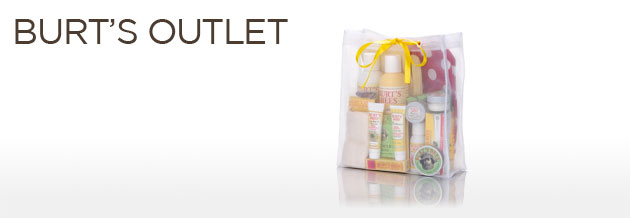
Burt's Bees also offers an Outlet on its website. Other sites generally call this a sale, and while the Burt's Bees site features no sale section it does have an outlet page. Some of the most popular products like Burt's Bees lip balms are on the outlet page as well as natural care sets, including a line of pomegranate infused items, sets of lotions and creams, and even travel-size friendly products. This is another form of sales promotion. Repeat customers are able to try products that they love and new customers are offered products at a lower price that may in turn stimulate a new customer base and increase loyalty to the Burt's Bees brand. 
    

Sunday, March 31, 2013

Ch. 17 Advertising and Public Relations

Burt's Bees, like other companies has to promote its product to consumers, they must successfully attempt to penetrate the market place, identifying the target market for the products they offer, while stimulating sales through advertising and public relations.

As mentioned in earlier posts, in recent years Burt's Bees launched the Natural Vs. campaign. It was widely successful in building and maintaining the brands image as one that is eco-friendly, works towards the graters good, and focuses on natural products. The natural product industry is an ever-growing one and produces millions of dollars in sales nationally and internationally as today's potential customer is more aware of its environment. and concerned with products that better our world environment.

Below are a few of the advertisement campaigns from Natural Vs.


These series of advertisements are about the Burt's Bees product not the competitors, and like some other advertisements they do not compare brand to brand, they simply and boldly state the differences in ingredients. They focus on what makes Burts Bees different from other companies, without mention of competitors. The only comparison made is with the ingredients used in items within the same group i.e. lotions, creams, lip balms, and serums. The advertisements are persuasive with close ups of faces, lips, and bodies, using a clear distinction in why and how Burt's Bees products better fulfill the needs, of dry lips and skin.


The company also notably launched the Find Your Burt campaign, in honor of Burt, one of the co-founders of burt's Bees and a true environmentalist. Along with building a mini-site the company teamed up with advertising agency, Baldwin& to develop an interactive advertising experience devoted to environmental awareness and education. The campaign was inventive in its use of a combination of various types of media to convey one message. A website, promotional tee shirts, giveaways of products, and handkerchiefs with Burt's face on them and the company logo in there signature bright yellow. The campaign also included print and television ads to create a total package for brand awareness. After the launch and success of the 'Find Your Burt' campaign, the company which Burt's Bees teamed up with won the award for campaign of the year at the Ad Age Small Agency Awards. The mini-site that went along with the campaign was launched on Earth Day in celebration of its 40th year in existence.  

Tuesday, March 19, 2013

Ch. 15 Retailing


              For this weeks blog post I visited Saks Fifth Avenue in midtown. The specialty store is located at 611 5th Avenue and has being providing its customers with high end luxury goods since 1924. Saks is a high-end department store featuring women's and men's fashion, shoes, bridal wear, and jewelry. Although Saks looks and feels like a deptment sotre because of its size, the large amount of goods that it sells, and the various segments for shopping that it offers, within each department there are specialty items for customers and the feeling is one of being in a small boutique while being well cared for and attended to with a high level of customer service that the store offers.  Like other stores in the area offering high-end luxury goods, Saks competes most notably with Bergdorf Goodman, Bloomingdales, and Barney's New York, three stores which offer goods from the highest quality brands in fashion, Louis Vuitton, Chanel, and Prada to name a few. The store encompasses an entire city block and is located directly across from Rockefeller center, there are 10 levels ranging from high end brands like Gucci, to mid-level brans such as Marc Jacobs and Juicy Couture. Classic pieces are arranged together while contemporary styles are displayed separately in different sections of the store and on different floors entirely.


            The first thing I noticed as with most other department stores, is the massive size of the place, filled with perfume jewelry bags, ladies in black uniform selling perfumes, or giving customers directions for other parts of the store. There is a cafe inside of Saks, and a salon, providing customers with the flexibility to shop, eat and groom themselves all in one place. Everything is organized in a way to maximize the customers choices for purchase. As I walked through the first floor I passed by the booths of many brands, Chanel, Cartier, Gucci, Christian Dior. All of these options were at my fingertips, and I was literally spoiled for choice. The downside, however, if there is one, is perhaps that there too much choice, so many options that if you don't know exactly what you want, you may be overwhelmed by the endless possibilites to choose from.

           There was no point during the whole experience at Saks that I did not feel assistance and a high level of customer service were far away. I talked about lipsticks and perfumes, things I wanted for myself, and was given advice, tips on makeup, and new products that brands were featuring for the spring and summer.


Monday, March 11, 2013

Ch. 6 Consumer Decision Making


Who will buy Burt's Bees? How will they make the final decision to purchase a Burt's Bees product? Will they first start with their own needs; dry skin, chapped lips or dull hair that needs a bit of life to it.

Chapter 6 sheds light on the motivating forces behind consumer purchasing decisions, and it is interesting to learn and begin to understand what processes occur when someone decides to buy a product. five key factors are involved in the decision making process - 1. Need recognition, 2. Information search, 3. Evaluation of alternatives, 4. Purchase, 5. Post-purchase behavior. These are all pretty straight forward, lending way to what a consumer wants or needs, how they find of about a product, whether through their own personal experiences or perhaps by the influence of others, an assessment of what other types of products in the same category are available in the market, the action of purchasing, and lastly a consumers reactions and feelings about that product after purchase.


Burt's Bees best selling product is there lip balm. It has been a staple of the Burt's Bees product lines for decades, and features a variety of lip balms all based with natural beeswax. Whether you want to nourish, replenishing or refresh your lips Burt's Bees makes a product that will fit your diverse needs.
The company, owned by Clorox, and accountable for over $5 billion in sales revenue last year, currently has more that 700 customer rating reviews of a single product; the Burt's Bees lip balm.


Additionally, potential consumers are influenced by cultural, social, individual and psychological factors and these are all a part of the steps taken when purchasing products.

Monday, March 4, 2013

Ch. 5 Developing a Global Vision


Entering the global marketplace for any company presents its set of challenges, obstacles, rewards and opportunities. Just like doing business domestically firms must use the knowledge and skill they implement into their marketing plans to move into international markets. From chapter 4 we remember and are familiar with the Four P’s. In the global marketplace it is the same, however now with new elements in place, are affected and are affected by a larger and more complicated environment. Where global business and the four p’s are concerned a few key factors differ from doing business in the firm’s home country.

A firm must decide if its best to alter a product before it enters the global marketplace, or perhaps after the experience of seeing how it has performed once in the marketplace. Sometimes products may need radical changes to enter and be better effective in new markets; products often fail because of cultural differences, price points, and advertising that does not meet to needs of the diverse consumer base of the international marketplace.    
As with domestic markets, managers must be inventive adaptable and forward thinking to help ensure the growth and success of the firm. New products from existing companies can be invented and packaging may be altered; cultural values and needs differ extremely through a variety of nations and this should also be considered; the price that products will be sold at and the value of a nations currency are all factors involved with going global.

In 2006 Burt’s Bees sales topped $250 million and currently the company has satellite offices in the U.K. Ireland, Canada, Hong Kong and Taiwan. Burt’s Bees sell their products to large stores like Target.com and smaller specialty boutiques in Europe and Asia. After the purchase by Clorox the company wanted to expand to new markets like China, but experts have agreed that entering into the Chinese marketplace clearly has a huge potential for growth but nevertheless presents its own challenges specific to the nation. The country is the No. 3 beauty care market in the world and is expected to rank at No. 1 with its ever-growing population and economic up-turn, providing an environment that is ripe for a large increase in sales revenue. The move into China would present high-level opportunities since the Chinese consumer it attracted to products that are natural and safe, additionally a market for lip care products is almost insubstantial, which is one of Burt’s Bees best selling products in the natural care market. In a report on Burt’s Bees move into China the VP of Global Marketing, Jim Geikie said, ‘there were lots of reasons to be excited.’ Yet the company initially found one major hurdle that struck far close to the core values of the company. None of Burt’s Bees products are tested on animals and this is something that the company stands firm on while upholding ‘The Greater Good,’ yet the Chinese government requires that all imports be animal tested. Burt’s Bees worked for two years to figure out a strategy that they were comfortable with to enter the Chinese marketplace; they worked with government agencies, local manufacturers, the use of Clorox government relations and experience, and finally figured out a way to be comfortable with the use of proper resources to work and sells products in China. 

Monday, February 25, 2013

Ch. 4 The Marketing Environment

          The marketing environment includes a few very important aspects to a companies marketing plan and strategy. Based on the elements within the marketing environment firms may implement new tactics and plans over time to continue to compete with internal and external changes that are needed to stay competitive within the market.

                                                              The Marketing Mix: 

Product:  This is simply the product, good, or service that a company sells and markets for a profit.
Place:  Refers to where this product/good/service is distributed, domestically and internationally, through e-commerce, or a variety of specialty boutiques and outlets.
Promotion:  These are the different approaches to widening the audience and in turn the sales of that a firms offers, by advertisements, public relations, sales promotion and personal selling which all have the potential to dramatically increase sales revenue.
Price:  What a buyer must give up in order to obtain the product/good/service. This amount is completely up to the firm, and is often the quickest element of the marketing mix, to change. The price can be competitive with other companies, both on the higher and low scale, by sending different messages to potential buyers what the quality or value of a product or service.

           For any company developing and positively identifying its target market while defining the elements within its marketing mix is crucial to its short and long-term success. After the purchase by Clorox in 2007 Burt's Bees has continued to push forward by increasing its market share and developing a stronger brand image while increasing profits. In 2008 the company teamed up with Mike Indursky to launch a new campaign for some its its existing and best-selling products. Today Indursky is the President of Bliss World, but in 2008 while working with Burt's Bees his skill and expertise involved increasing awareness for the personal care market place, focusing on natural product innovation and new marketing strategies. It was in this year that Burt's Bee launched the Natural vs. Campaign. The ads totaled 6 images of Burt's Bees products with a list of their ingredients versus the ingredients found in other products of the same category; lip balms, body lotions, hand creams etc.. The simplicity of the advertisements was hard to deny. Where one product was made with petroleum, Burt's Bees would use beeswax, royal jelly instead of dimethicone - a silicone oil which can irritate the skin, milk and honey vs. DMDM Hydantoin - a chemical preservative, all clearly showing how Burt's Bees products were different from other brands. The campaign went one step further by suggestive asking consumers if they were reading the list of ingredients in the products that they purchased.


Recently in 2012 Burt's Bees launched the Güd (good) line in there attempt to target a younger market. The previous Burt's Bees customers were older, well-educated, with middle to high incomes, people who were more conscious of the products they used and their own environmental impacts which is why the Burt's Bees brand would appeal to them. To reach a younger customer Burt's Bees developed the first fragrance-focused brand in the natural products category. 

Target Market: A group of people or organizations for which an organization designs, implements, and maintains a marketing mix intended to meet the need of that group resulting in mutually satisfying exchanges. 

- As the marketing environment changes, marketing managers must also change. 

- Making changes to the marketing mix allows managers to influence the external environment. 

- Environmental scanning, the collecting and evaluating of information on the external environment,  enables managers to make intelligent decisions for the marketing strategies as well as better assessing target markets. 

Component Lifestyles: The practice of choosing goods/services that meets one's diverse needs and interests rather than conforming to a single traditional lifestyle. 

- It is important to note that today's average consumer is more diverse than ever before, and therefore there lifestyles and interests reach a wide range of products and services. 

Demography: The study of peoples vital statistics such as age, race, ethnicity and location. 

- The study and research of demographics gives a large resource of information to marketing managers, by improving the 'how' and 'why' motivations of potentials customers. 

- Demographics are strongly related to buyer behavior, and understanding the demographics of consumers give companies competitive edge. 


With the launch of its Güd line of fragrance-based products, Burt's Bees has endeavored to target a market of women between the ages of 18 and 24. This customer is 'not anti-environment, but does not make purchases based on a product's green credentials.'  The difference between this customer and the traditional Burt's Bees customer, is that they are actually driven to purchase products on how they smell. This in and of itself is the selling point for the Güd product line, they are made specifically for women who purchase products based on there scents. 


Sources: Ad Age, Sustainable Brands, Huffington Post , Güd 


Tuesday, February 19, 2013

Ch. 3 Ethics & Social Responsibility

       Is it important to do what’s right, when it is right? Is it ok if not that many people are negatively affected by your actions? Is it ok if the environment suffers from the things you do as an individual or business? Your answers to these questions will tell a great deal about your position on ethics, morals, social and environmental responsibility.

        If I take a companies’ mission statement as the clearest and most succinct purpose of their business, then I can next look to their history, their commitment, and what they stand for. In recent years more and more firms have made their positions on ethics and social resp, openly available to consumers and customers. Ethics as defined are the moral principles or values that generally govern the conduct of and individual or group. This can vary greatly among cultures concerning women’s rights, acceptable speech, social norms, and animal rights. A general view of good morals are those that believe in not hurting ourselves or others, in being good to others with kindness, and treating our environment with respect and care. In recent years a wave has swept across business people and consumers alike for more accountability among firms on their practices, as well as a vested interest in the environment and the worlds natural resources. People are more interested in recycled products, green products, eco-friendly products, and the like, creating an evolving and expanding marketplace for businesses.

       To commit to the ‘The Greater Good’ a firm must do what is best for an individual or themselves, for society, and the environment. The position on ethical behavior that takes the highest responsibility for the affects individuals, groups of people and businesses have on each other and the environment at large. Burt’s Bees has chosen to adhere to ‘The Greater Good’ as it conducts business concerning its own values and morals.

       In 2007 Clorox brought Burt’s Bees and as I’ve learned more about the company, my first thought was Clorox? Burt’s Bees? A merger? One company is a household name for bleach, and on the other hand a brand that specializes in natural personal care product. Amid mixed reviews, some customers were angered and felt betrayed by BB’s, while others thought is was smart of the company to be brought for over 900 million, which Clorox paid – in cash. Either way every two years since the purchase, Burt’s Bees has put out a Social Responsibility report, informing the public of their continued dedication to ‘The Greater Good.’ The reports covers everything from the culture of BB’s and its employees receiving bonuses when environmental goals are met, to sourcing raw materials from minority and women business owners. The report itself, known in the business world as ‘Corporate Social Responsibility’ seeks to ask and answer questions of a firm’s position and plan concerning social welfare, questions range from a companies’ own actions to issues of pollution and livable wages. What can we do better? How can we have the least possible affect on the environment, or our employees? How can we have a more positive impact in the way we conduct business?


Burt’s Bees Social Report of 2008
The 2008 report gives a detailed account of the changes the company has made since being purchased by Clorox in 2007 as well as some of its accomplishments along the way.

• Launched The Natural Standard with other leading natural care brands and the Natural Products Association.
• Donated over $100,000 of goods to AmeriCares to provide hygiene and personal care to the worlds’ children who need it most.
• Through the first half of 2008 – reduced manufacturing related water use by more than 20 percent.
• Employee programs included incentives for alternative transport, hybrid vehicles, carpooling or biking to work.
• Creates a role for Director of Sustainability
• The use of post consumer recycled (PCR) or post industrial recycled (PIR) materials whenever possible on all packaging


Wednesday, February 6, 2013

Ch. 2 - Strategic Planning for Competitive Advantage


         Chapter 2 discusses and defines in detail strategic planning as the ‘managerial process of creating and maintaining a fit between the firm’s objectives, resources, and evolving market opportunities’. The firm must establish and target their main activities and goals as well as create a plan to achieve its goals. An important part of achieving goals are found in the implementation and control of the marketing plan. ‘How will we enter the marketplace?’ ‘Who will be in charge of assignments and objectives?’ ‘How will we produce, distribute, promote and price our products?’ are just a few of the many questions that the marketing plan attempts to answer.


         Burt’s Bees can clearly be defined as a 3 P’s business with their commitment and focus on profits, people and the planet. As advocates for sustainability, natural products, and a vested interest in protecting the environment, through community building initiatives with Habitat for Humanity and Kashi. As the company continues to develop and implement their marketing plan they may choose to build, harvest, hold or divest a variety of product lines. Building would correctly identify a problem child or question mark product with the potential to be a star, with large profits as a fast growing market leader. Holding a product that is termed a cash cow for its high return on investment is also an option. Harvesting a product is a proper choice when more revenue is needed from a cash cow with long-run profits that are unfavorable because of low market share. Divesting completely, by halting production of a product because its low sales or failure to penetrate that market is another strategy to planning for a competitive advantage. Burt’s Bees have a wide range of products that potentially fill these classifications, and it is important that they accurately assess their product lines and offerings as to best increase market share, brand awareness and compete within the ever-expanding natural care products industry.


SWOT Analysis- 

Strengths:

 Burt’s Bees has a loyal customer base. Consumers today are more interested in healthy and natural products than ever. Burt’s Bees offer an effective line of more than 150 products that are 100% natural. This has created some stability for them within the market place as a firm that provides products customers are eager to purchase. They are committed to the environment, personal care wellbeing, and sustainability.

Weaknesses:

A lack of unified advertising through traditional means of magazines and promotions. This means that a large amount of potential customers do not know about Burt’s Bees products. Items with low sales and poor reviews include but are not limited to, sunscreen products. There is a lack of a solidified brand image with the use of many different logos, typefaces, and headers for visual branding, without a clear image.


Opportunities:

An alliance in 2007 with Clorox when Burt’s Bees was brought for $175 million expended Burt’s Bees to the mass market. The merger helped bring the company to the forefront of the natural personal care industry, which is rapidly growing. The possibilities and exploration of global expansion into international markets have increased sales potential and growth.

Threats:   

Threats may come from being positioned in a mass market with pricing that is higher than that of competitive brands. Notably, Aveeno is a competitor of Burt’s Bees, who offers similar product lines made of natural ingredients of lower prices points and with a stronger brand image. On average Burt’s Bees products of the same types as competitors are generally higher raising the obviously question of why consumers would purchase Burt’s Bees over other brands.